I was a teenage white girl living in Indiana in the early 1990s. The world around me was loud with change: the fall of the Berlin Wall, the AIDS crisis, the end of the Cold War, the rise of Reaganism, and growing demands for racial justice, environmental protection, LGBTQ+ rights, disability rights, abortion rights, and gun control. The Rodney King beating and the ensuing Los Angeles uprising brought the violence of racial inequality into sharp focus. Everywhere, people were pushing back against the status quo.
And the music. The music was killing it.
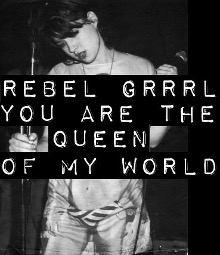
Punk had emerged in the late 1970s, on both sides of the Atlantic, messy and loud, fueled by anti-authoritarianism and a DIY ethos. By the early ’90s, riot grrrl was bringing feminist rage to the forefront. Kathleen Hanna was screaming about revolution. Artists like Keith Haring were turning graffiti and public space into vehicles for expression and protest. There was a whole cultural movement insisting that you didn’t have to ask permission to speak, create, take up space, or be yourself. Punk offered something else, too: the possibility of finding your people, of belonging without having to conform.
At the same time, a lot was going on in my Midwestern home. I grew up in a family mired in infidelity, addiction, separation, chaos, and loneliness. The permission to rebel was all around me, but somehow it never quite reached me. I missed it. All of it.
Feeling anger is hard. Especially for those of us raised to be good girls. While Kathleen Hanna was screaming, “girl style revolution now,” I was quietly numbing out to the melodic guitar flights of Jerry Garcia. I moved far away from home, intellectualized my feelings into a philosophy degree, and worked to become a psychiatrist. But the feelings were still too dangerous. I settled into a tidy research career, where I could study emotional suffering without having to get too close to my own.
Eventually, the feelings became harder to contain. I was navigating a challenging career, with moments of feeling disrespected and ignored as a professional woman, while raising two babies at home. The strategies that had helped me function for so long were no longer enough. What I couldn’t bear to feel didn’t simply disappear. It shaped my life in ways I was only beginning to understand.
So I finally did the most PUNK thing ever. I decided to stop numbing, stop turning away from myself, and start trying to be heard.
The first time I sat in the therapy room, I described my “normal Midwestern childhood.” My therapist responded sarcastically: “So your normal childhood is why you are a depressed psychiatrist sitting in my office?”
His sarcasm washed over me, and he had me.
I think, for the first time, someone wasn’t going to let me hide behind the familiar story that everything had been fine. He wasn’t asking me to perform competence or demonstrate that I had it all figured out. I could begin to wonder what might happen if I stopped minimizing my own experience.
Ten years and thousands of hours later, I’m still on his couch. I’m still often tearful, messy, and sometimes tempted to think I’m “not better.” I still get angry. I still get scared of my anger. But I’m increasingly able to recognize what I’m feeling, to stay with it rather than immediately explain it away, and to find words for things I once couldn’t bear to say.
Healing isn’t linear. It’s disorganized, loud, sometimes ugly. It doesn’t necessarily make you less emotional, or turn you into some serene, perfectly regulated version of yourself. Sometimes it means becoming more willing to feel what you’ve spent a lifetime trying not to feel. Sometimes it means discovering that anger can tell you something important, that sadness doesn’t have to be hidden, and that being difficult, imperfect, or disappointing to someone else isn’t the end of the world.
If you’re lucky, the process can begin to feel like freedom. Like aliveness. Like protest.
I’m not healed. I’m sometimes dysregulated, and I’m often still afraid of my own rage. But I can finally feel the Descendents’ punk anthems, scream along to Bikini Kill, and embrace my emerging Rebel Grrrl. I may be nearly 50, in trousers and reading glasses instead of babydoll dresses and combat boots, but I now know that I am Punk as Fuck.
In the words of my punk feminist icon, Kathleen Hanna:
“Hey girlfriend, I got a proposition
Goes something like this:
Dare ya to do what you want
Dare ya to be who you will
Dare ya”

